Ribwort Plantain, the Little Healing Herb of the Wayside – with a Recipe for Homemade Candies
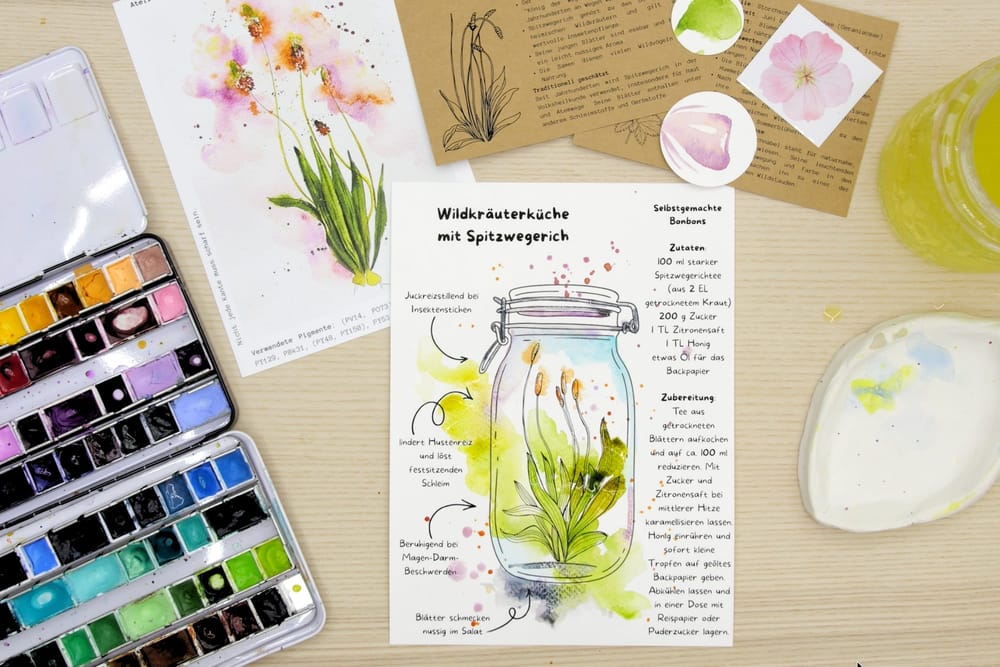
My new series, the friendly wild ones, begins with a plant that most people simply walk past: ribwort plantain. For me it's the perfect first motif, because it shows exactly what I love about the wild ones. It's unassuming, grows everywhere, and is still full of small wonders.
In my August package there's a special sheet for this motif. It's meant to be colored in and at the same time it's a real recipe. So you can hang it up and simply find it beautiful, or use it and cook something lovely from it. I find the two together far nicer than a plain practice sheet.
A herb everyone knows and no one notices
Ribwort plantain grows along every path, in every meadow, in every crack at the roadside. Almost everyone knows its narrow, upright leaves with the distinct lengthwise ribs, without knowing its name. From the leaf rosette rise thin stems that carry a small cylindrical spike at the top, crowned by a delicate ring of white stamens. It's precisely this fine wreath that makes it so appealing to paint.
It's a survivor. It lets itself be trodden on, mown down and overlooked, and still keeps coming back. Perhaps that's another reason I like it so much.
A little meadow pharmacy
Ribwort plantain isn't only beautiful, it has been a valued herb of folk medicine for centuries. Just recently I walked into a patch of nettles, and I simply rubbed the sting away with a crushed plantain leaf. I've known it for exactly that since my childhood days. A freshly crushed leaf cools, the juice that comes out settles over the skin, and the itching noticeably eases. It's one of those old things that many still know from their grandparents, and that simply work.
Traditionally, ribwort plantain is also used for a dry cough and a scratchy throat. Its leaves contain mucilage that lays itself like a gentle film over the irritated throat. That's exactly what the little candy recipe on the sheet builds on. One note is close to my heart: I'm not a doctor, and this is not medical advice, but old home-remedy knowledge, passed on out of a love for plants.
Painting and using at the same time
The recipe sheet is my favorite part of the August package, because it joins two things I both love: painting and the plant itself. You color the printed plantain in your own tones and end up not just with a picture, but with a little guide you can really use.
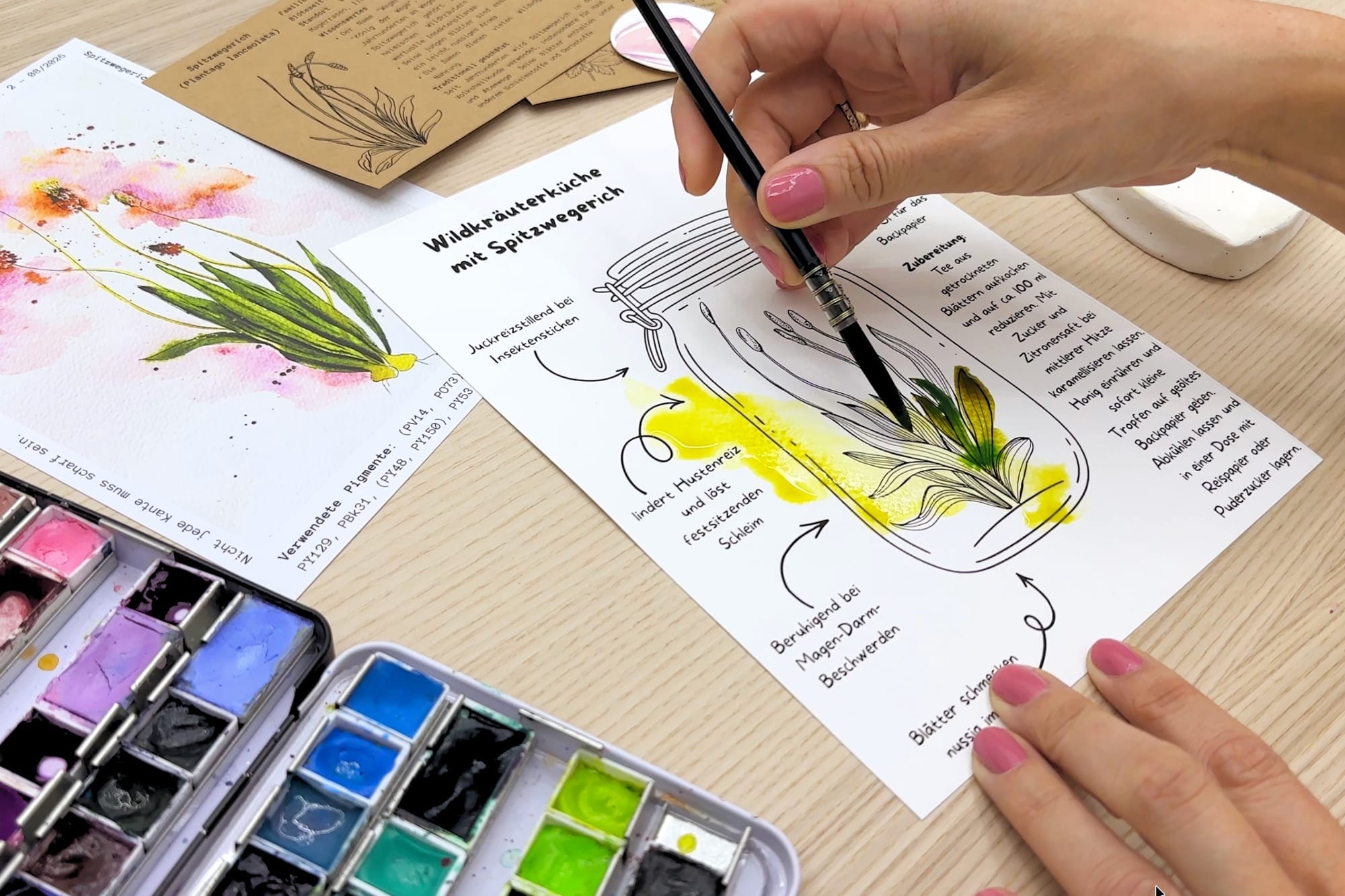
While coloring, it's worth looking closely and calmly. The leaves aren't simply green; they shift from a warm yellow-green on the young shoots to a deep, cool green in the older leaves. The spike carries a soft brown, and the wreath of stamens looks best when you simply leave the white of the paper free there.
And anyone who would rather color the recipe sheet step by step together with me will find the matching painting session in the Atelier.
Homemade ribwort plantain candies
And this is how the motif becomes something for the teacup. The recipe from the sheet:
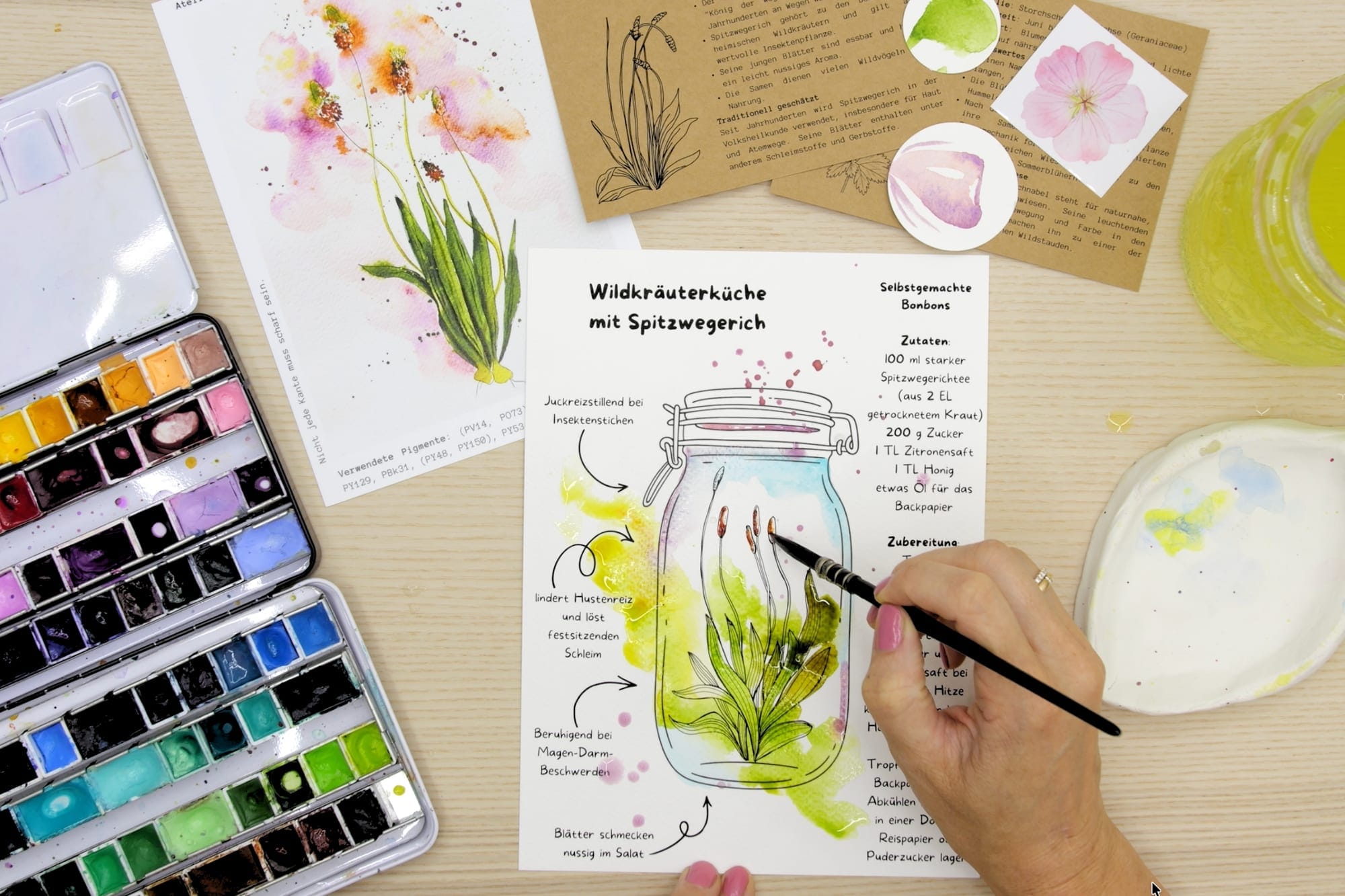
Ingredients
100 ml strong ribwort plantain tea (from 2 tablespoons of dried herb)
200 g sugar
1 teaspoon lemon juice
1 teaspoon honey
a little oil for the baking paper
How it's done
Bring the tea from the dried leaves to a boil and reduce it to about 100 milliliters, then strain. With the sugar and the lemon juice, let it caramelize over medium heat until the mixture is golden brown. At the end, stir in the honey and immediately place small drops onto oiled baking paper. Let them cool and store them in a tin between sheets of rice paper or with a little powdered sugar, so the candies don't stick together. There you have little helpers for the next scratchy throat.
Why this means so much to me
For me, this holds the whole idea of the friendly wild ones. A plant that no one wants is in truth beautiful, useful and generous. It gives insects food, us a home remedy, and the paper a wonderful motif. Whoever next sees a ribwort plantain at the wayside might pause for a moment, just as I do. I've told more about the whole series in my post about the friendly wild ones, and anyone who'd like to paint along will find everything in the Atelier for Creatives.