Finding Your Own Style – and What My Neurodivergence Has to Do With It
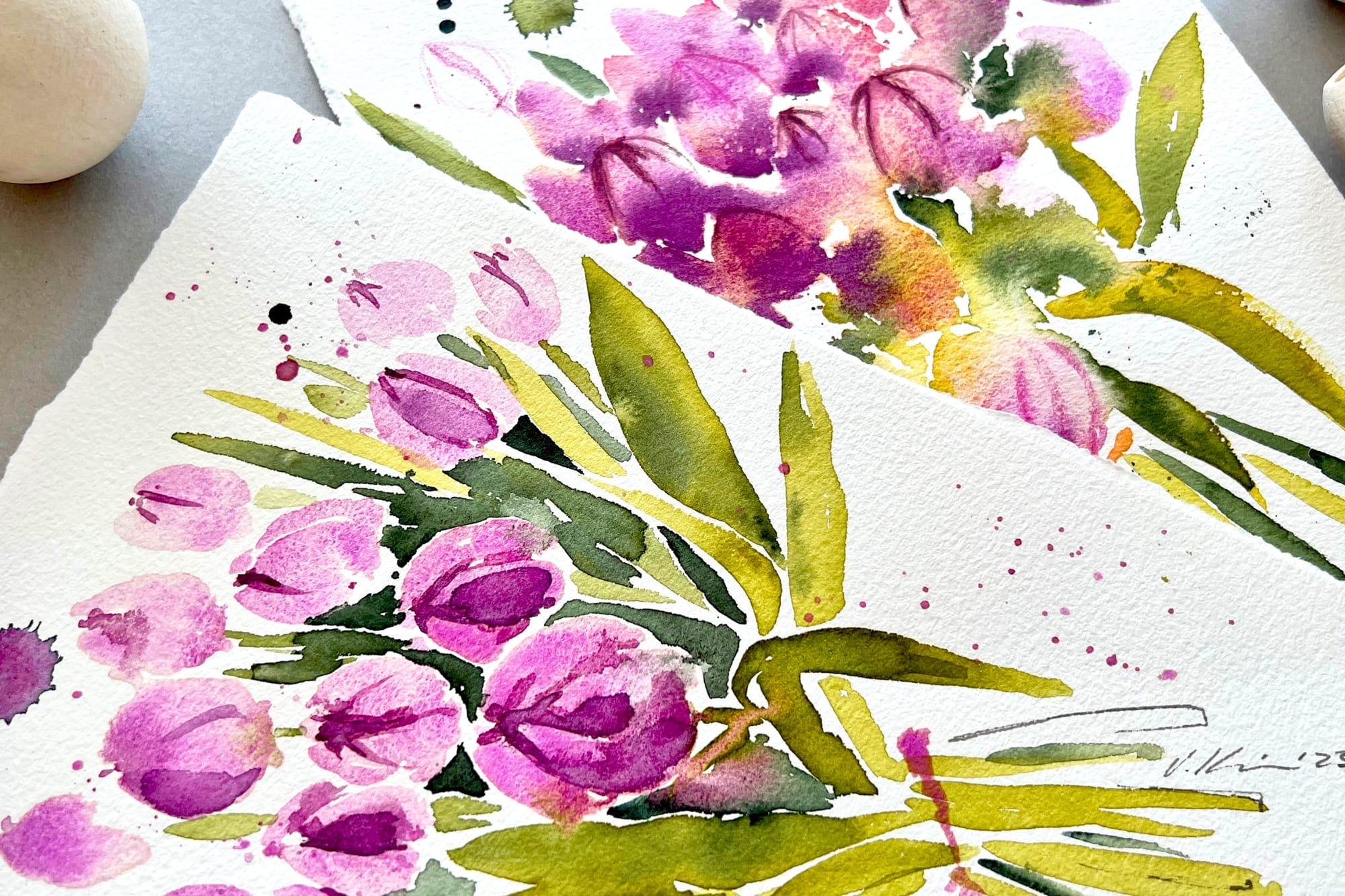
If I'm honest, my style is a lot like me: impatient. A picture has to be finished in one go, or I lose it. It's experimental, outside the norm, and sometimes quite deliberately against it.
I didn't stand by this style from the start. Quite the opposite: it took me a long time to understand that this is precisely my strength and not my flaw.
The fineliner that wasn't allowed
Many years ago, an art professor once criticized me for using a fineliner on a watercolor. A single sentence, and it left me unsure of myself for years. Afterward I tried to stick strictly to the supposed rule and do what everyone else was doing.
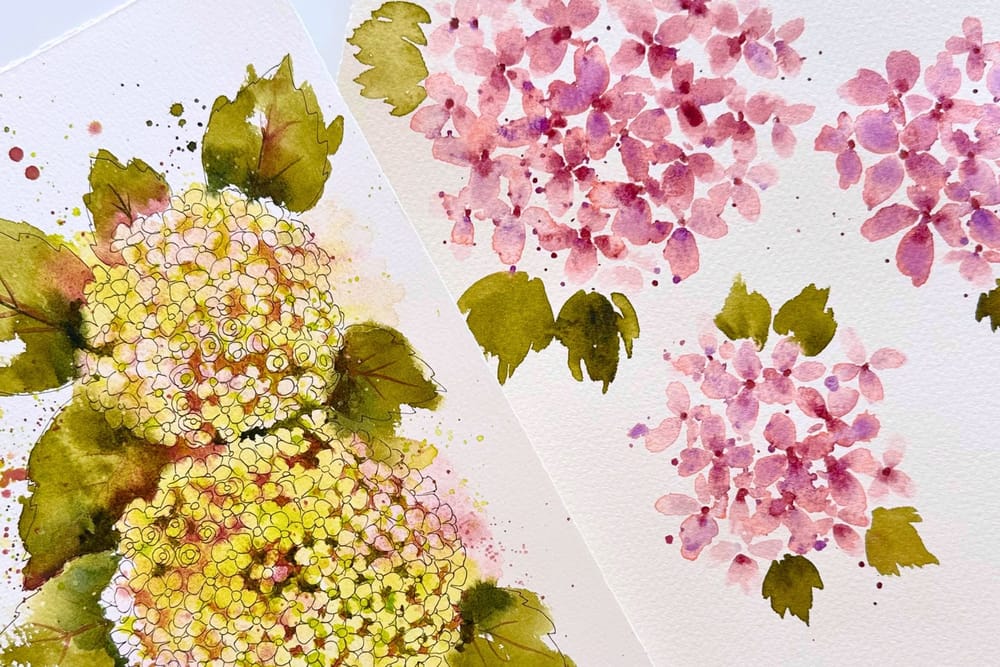
It was only after a long break that I started painting again. And I noticed something: the pure flower paintings weren't complete for me. Something was missing. So the fineliner came back, and in that moment I understood that I don't have to listen to that one voice. Why had I held on for so long to the words of a person I hadn't seen in over ten years?
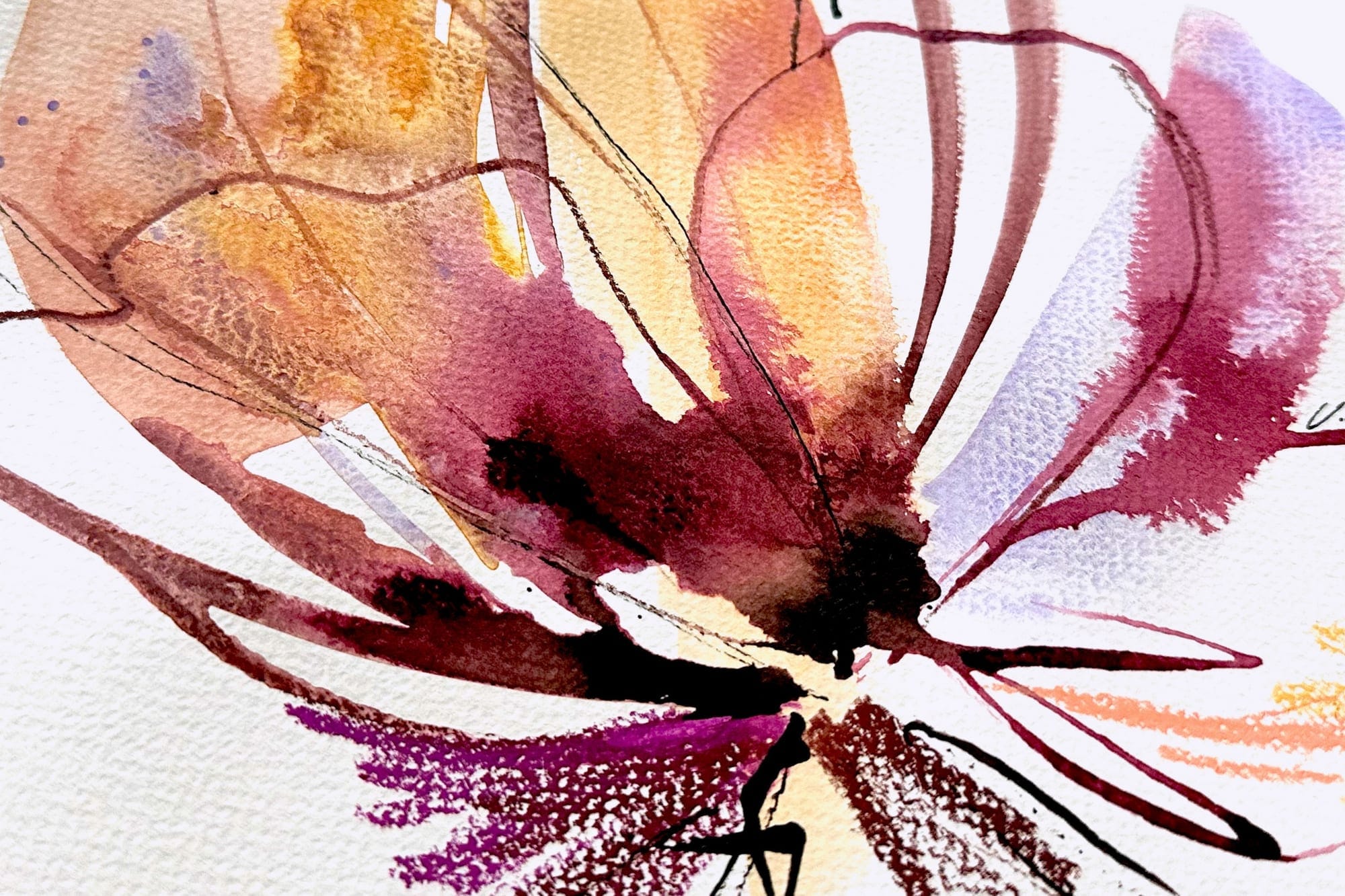
And I took it even further. At some point I deliberately painted with plenty of water right across the drawn black line. I ignored the boundary on purpose, and it felt incredibly freeing. It's still the style I mostly paint in today; I stay inside the line only when there's a good reason to.
With the fineliner, my pieces were finally complete. And that was exactly the beginning of my templates.
How I see and how I paint
That I go my own way has a lot to do with the way my mind works. I'm autistic, I have ADHD, and both shape how I make art.
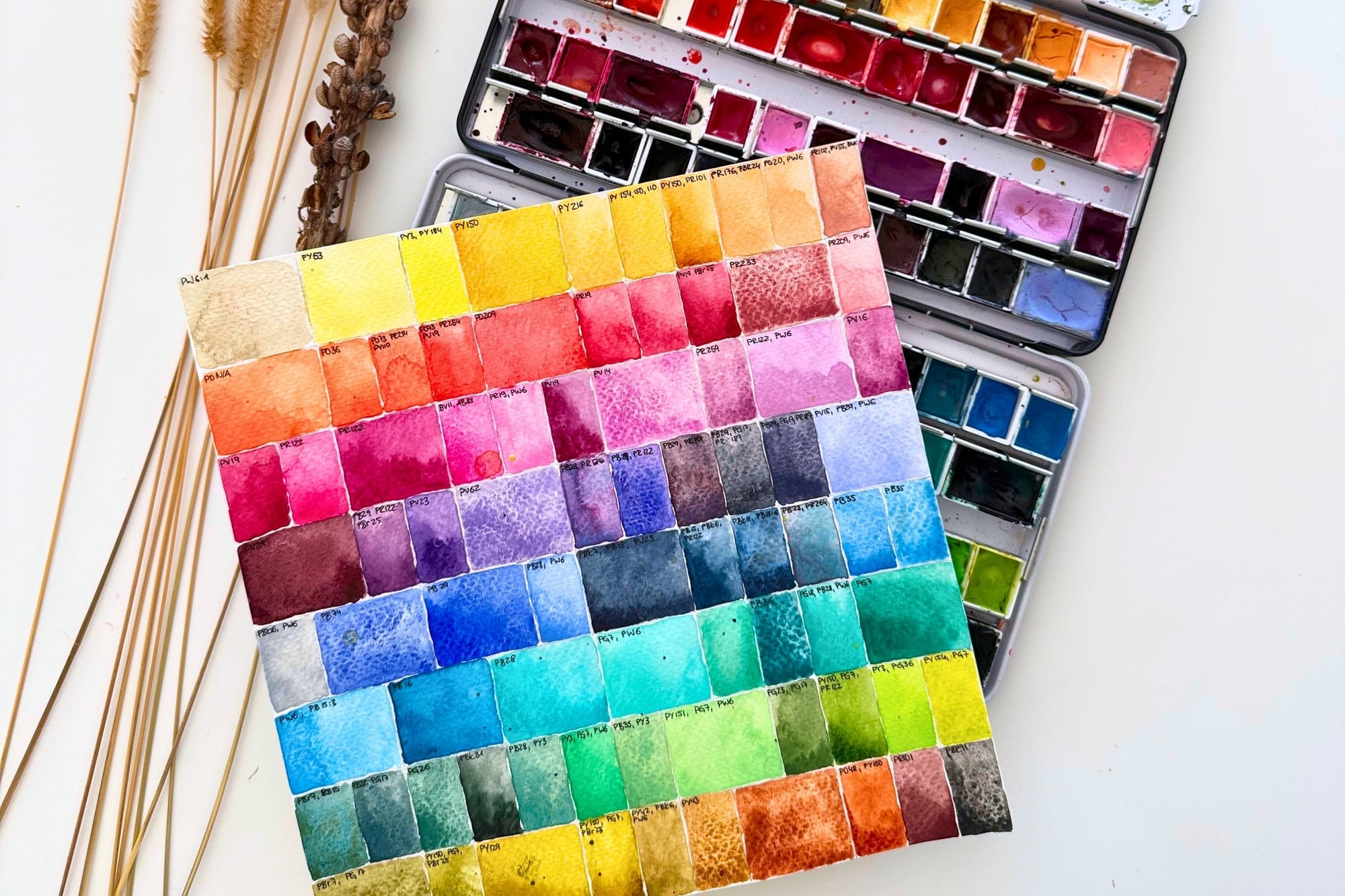
The autism makes me categorize, collect and sort things. The hyperfocus of ADHD does the rest: I pick up botanical names or pigment codes somewhere and later have no idea where I know them from. I just know them. Perhaps that's the reason for my deep knowledge of pigments.
On top of that comes a very intense way of perceiving things. Whether something is aesthetically right or not, I don't ponder for long. I feel it and simply do it.
At the same time, I can't stay with one task for long. That's why I finish my pictures in under an hour. Whatever doesn't work is promptly cut up into bookmarks. But this short span is actually an advantage when I want to pass on my way of painting: for my painting sessions I only need fifteen to sixty minutes, and that way I don't overwhelm anyone on the other side of the Atelier.
The one exception
This intense perception has another side, too. In everyday life I can barely relax. The many sensory impressions and thoughts in my head are exhausting and sometimes overwhelming. I constantly feel tension, time pressure, the sense of not doing enough, and I try to control the chaos with even more effort. I'm very perfectionistic about everything I do.
Painting is different. It's the one exception. Then I let water and pigment lead me instead of controlling them. Only then do my thoughts grow quieter and slower. For me that is almost therapeutic.
The norm is not the goal
If there is one thing I'd like to pass on, it's this: the norm is not the goal. Your own individual unfolding is.
Everyday life for neurodivergent people is demanding. It costs an enormous amount of energy to act as if you were like everyone else. And often the hard sides overshadow the strengths that the very same people carry within them. Many find it difficult to accept themselves, let alone to love themselves.
But if you manage to accept that you won't change, that the norm is not the goal, and to turn your gaze toward your own strengths, then something wonderful unfolds. In my case it's my capacity for enthusiasm, my urge to solve problems, and the fact that I have no fear of the unknown. Many great things did not come about because ordinary people did ordinary things. It was mostly those who thought differently and felt differently: the supposedly not-normal ones.
This attitude holds for me toward others, too. A picture by another artist doesn't have to please me at all, and I can still value it, because someone dared something new or expressed something of their own. That's exactly the point: every person, every artist is unique, and no one should bend themselves out of shape for it. In the end, the fineliner gave me back not only my style but also the permission to work the way that feels right for me. And that permission is something I wish for everyone who still hesitates.
My fineliner was a mistake in the eyes of a professor. For me it became the very thing that makes my pictures complete. Perhaps that is exactly what your own style is: the courage to keep what others would leave out, and to try what most people are afraid of.