Little Helpers That Spark Creativity - and One I Avoid
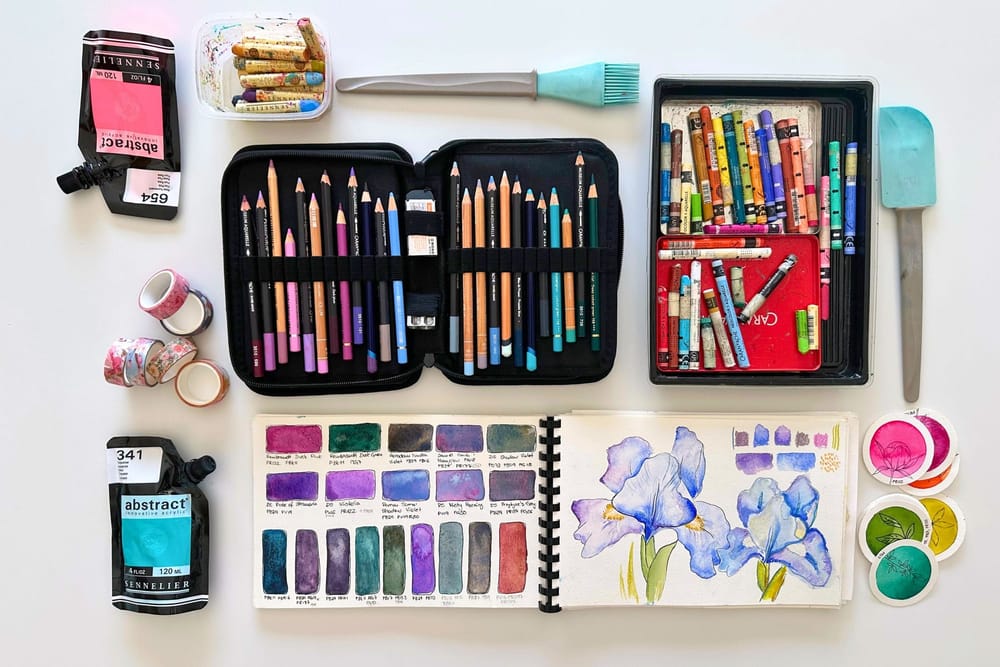
To me, creativity isn't a talent you either have or you don't. It's more like a muscle - and sometimes it just needs a small nudge to get moving. That's exactly why I love certain little helpers. They're rarely truly necessary, but they open new doors, take away the fear of the blank page and invite play.
Here are a few of my favorites - and one I deliberately do without.
Fineliner
The fineliner has been with me for a long time. Fine lines, leaf veins, stamens or a whole outline - they give a plant structure and character. Just how much a visible line can change a picture is something I described in my post about templates and outlines. The only thing that matters is to reach for waterproof pens, so the lines don't dissolve once you start painting.
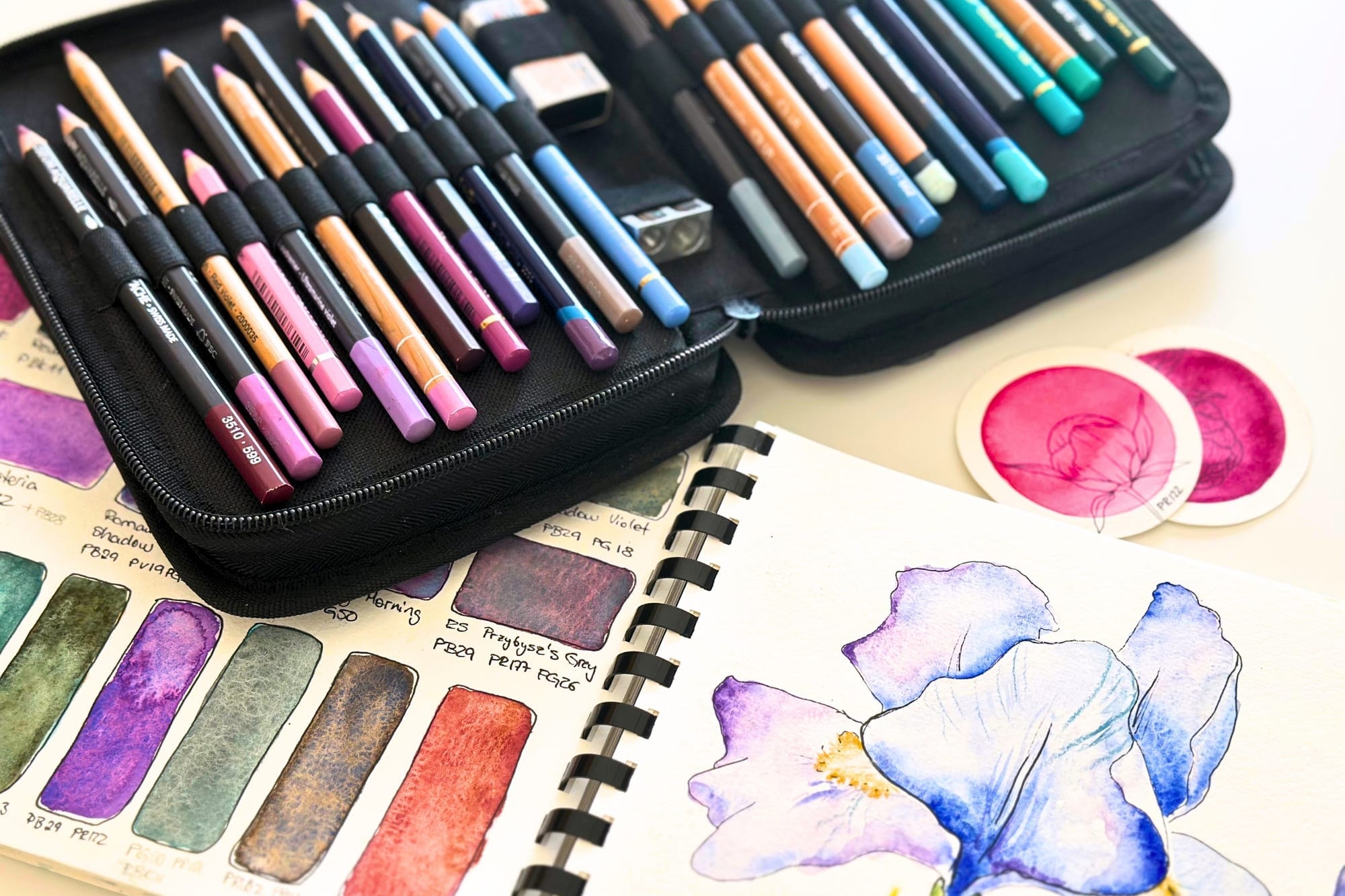
Watercolor pencils
I use watercolor pencils in two ways. First as an underdrawing - whenever I deliberately don't want a visible outline later on. And second for fine details right in the painting: I briefly dip the pencil into water, which releases the pigments, and paint with it on damp paper. For delicate accents like these, it replaces a thin brush for me.
Stamps
Stamps might look playful at first glance, but that's exactly their appeal. Small patterns, hinted blooms or a textured background appear in seconds - with no pressure and no fear of doing something wrong. What matters is waterproof ink - just like with the fineliner - so the print doesn't dissolve when you paint over it. Stamps are especially lovely for smaller pieces like greeting cards or for the sketchbook.
Sketch and swatch pads
A pad just for experimenting is worth its weight in gold to me. Everything is allowed to go wrong here. I test new colors, warm up, try out gradients or capture ideas before they move into the actual painting. And because I know my colors by their pigments, I keep making swatch cards there - they're my most important point of reference. Best of all: I keep returning to the same pages and add patterns or colors that happen to fit. Over time, a simple practice pad turns into real little abstract artworks.
Pastels and colored pencils for doodling
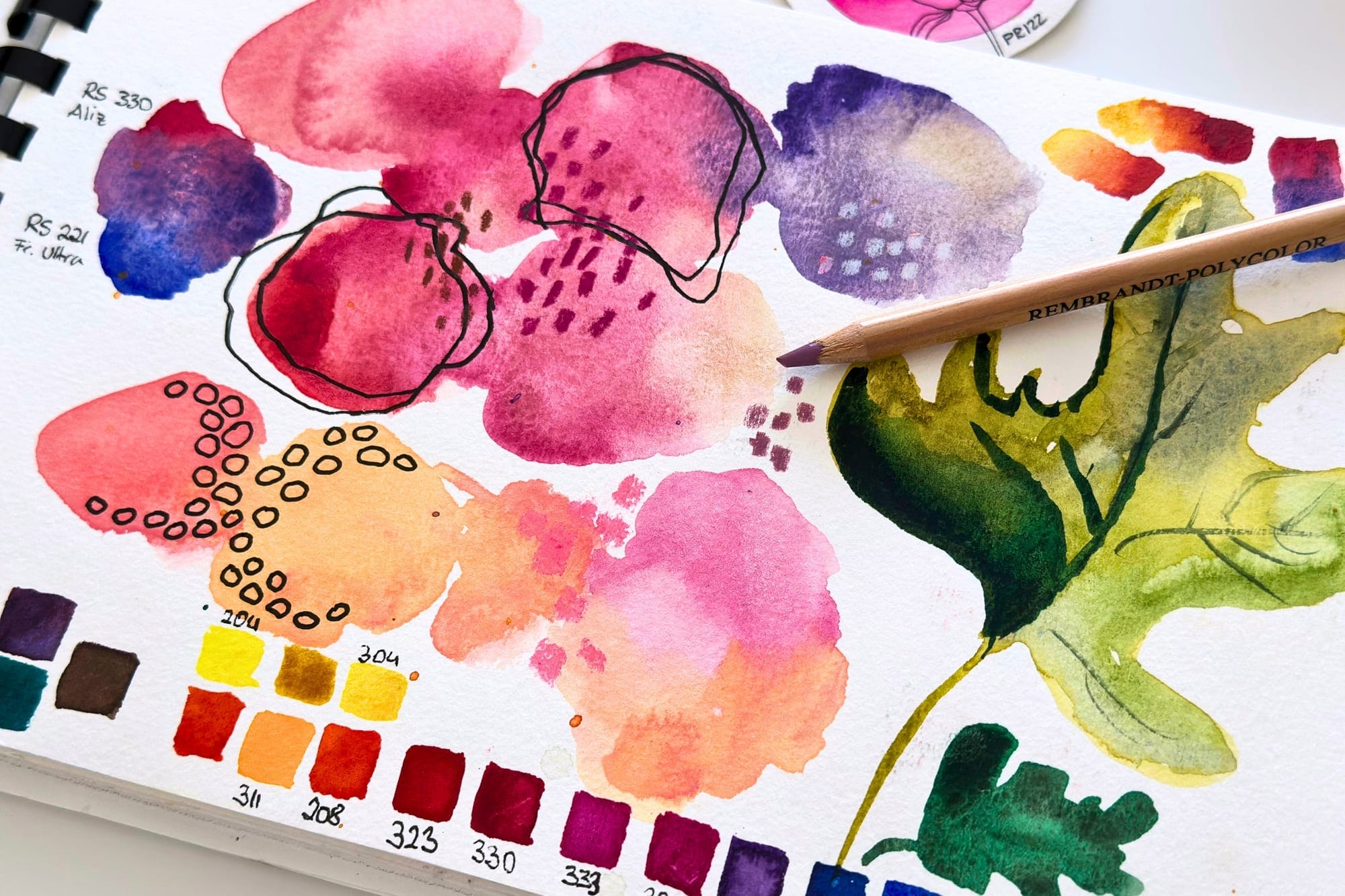
For pure doodling I love pastel or wax crayons like the Neocolor by Caran d'Ache - they come in water-resistant and water-soluble versions, and both have their charm. Combined with non-soluble colored pencils, they're wonderful for creating abstract pieces. Here it's worth paying attention to lightfastness, so the colors stay bright for a long time.
Special brush shapes
A brush doesn't have to be round. A cat's tongue lays down petals in a single stroke, a rigger pulls endlessly fine lines, a fan brush hints at grasses or texture. Which shape suits which task is something I gathered in my post about the best brushes. Even a single unfamiliar brush can nudge your own style in a new direction.
Painting sponge
For loose wet-on-wet backgrounds, I like to dampen my paper with a soft painting sponge. It spreads the water more evenly than a brush could, and the pigments then flow into one another especially softly. It's also a lovely tool for textures like suggested foliage. There's more on this in my post about watercolor techniques.
Washi tape and masking tape
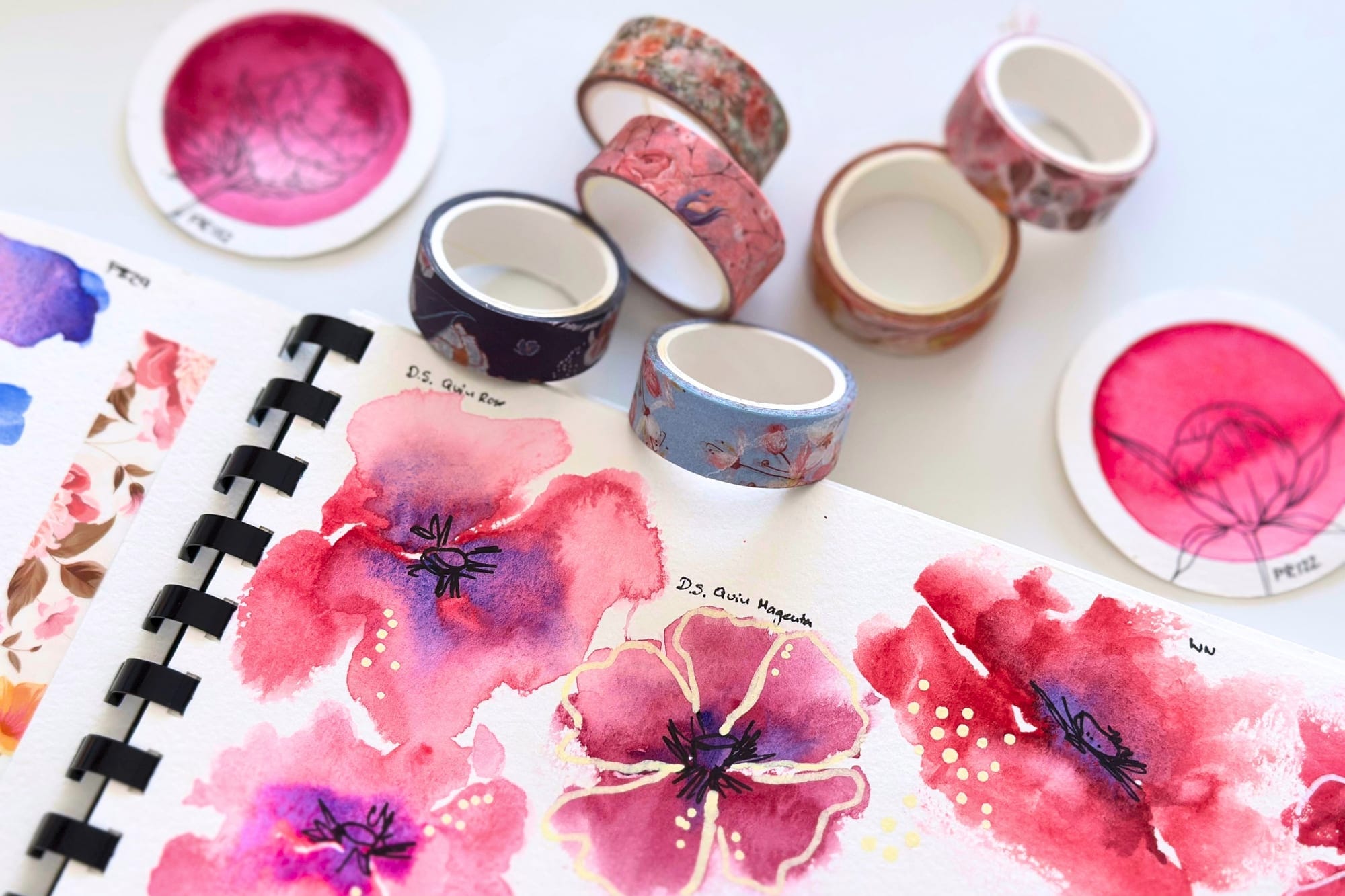
A simple strip of tape can do surprisingly much. It holds the paper in place, creates a clean white border or crisp edges and shapes. Washi tape is especially gentle on the paper and can be peeled off again later without a trace. A narrow white frame around a finished watercolor often already looks like a little passe-partout.
And one I avoid: masking fluid
There's one tool I deliberately leave out: masking fluid. It does reliably keep light areas free while you paint generously across them. But I've found that the paper yellows in exactly those spots over time. So I'd rather leave my light areas open from the start, or work with negative painting. It takes a little more planning, but it preserves the purity of the paper.
My conclusion
None of these helpers makes a picture more beautiful on its own. But they make painting easier, more playful and often more surprising. Creativity rarely appears under pressure - it appears while experimenting. And that's exactly what these little helpers invite you to do.